How to Escape Rip Currents
Consider this your complete guide to keeping your family safe in rip currents, those strong currents of water that can pull you out to sea from the beach. Here is what you need to know.
Rip Currents Are a Visible Hazard
A rip current is a fast, powerful flow of water moving away from the shore.
What to Do if You are Caught?
The priority if you become caught in a rip current is to keep calm and conserve your energy. The natural reaction by some is to try and swim directly back to shore, but experts advise swimming parallel to the beach instead. Swim at an angle of 90 degrees to the rip current's direction to escape it, which means sideways to the current, not straight back.
Another option is to allow the current to take you out beyond the waves, then use the surf to wash you back, letting the momentum carry you closer to safety. If you cannot escape, stay afloat by treading water with your arms. Do not try to swim against the current, as that could exhaust you. Once the rip current subsides, use the waves to help you return to shore.
At all times, if you have become caught in a rip current, raise your arm and wave for assistance. Blow a whistle if you have one — shout for help but reduce the risk of swallowing water. Even with the perfect technique, rip currents can suck you out toward deep water. Do not attempt a rescue unless you are trained and have a flotation device, as they could become casualties.
Swim Where Lifeguards Are
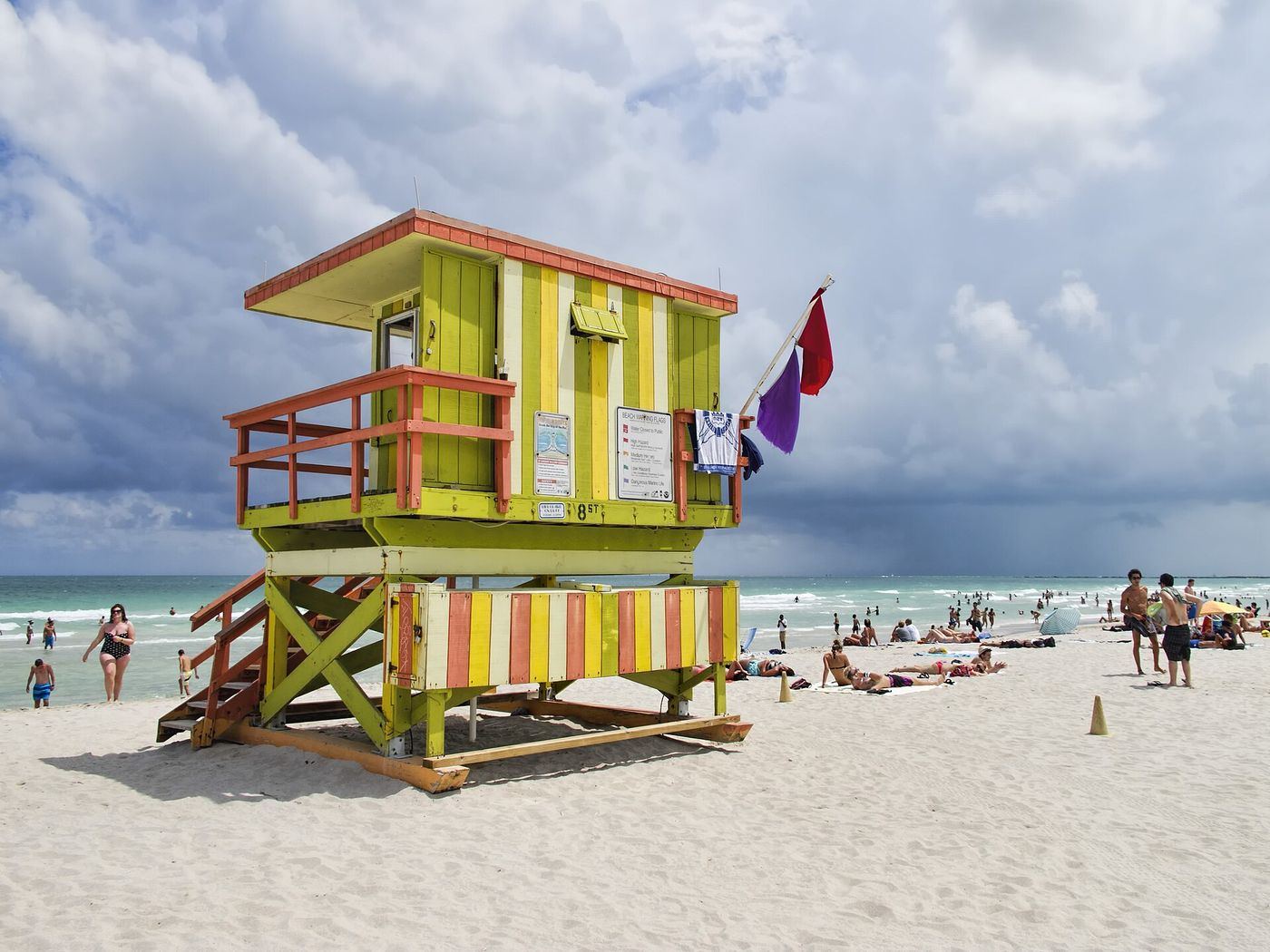
Limit your beach visit to one where lifeguards are on duty. Swim only in the area marked out with flags — these zones are monitored for potential hazards like rip currents in real-time by professional help at hand. Do not assume it is safe to swim further afield. Even in the flagged zone, stay alert to rip currents forming. If you spot one, inform a lifeguard about your observation.
If someone else is caught in a rip current, raise the alarm with a lifeguard. Do not try to enter the water to rescue them unless you are specifically trained and certified to do so, in which case you should deploy a lined throw to aid their escape. The NSRI uses an NSRI Pink Rescue Buoy for helping people who are struggling in rip currents.
Call for Help, Then Swim Back to Shore Where Lifeguards Are
- 1. Do not feel you have to try to swim against the current. Float, do not fight.
- 2. When the rip has released you, aim to swim diagonally toward the beach.
- 3. If you cannot escape, raise your arm and wave for assistance.
- Your best chance is with trained experts.
For your safety: Better, go with a family member who is a strong swimmer and can spot rip currents. If in any doubt, stay in the shallows.
The NSRI's Guide to Surviving Rip Currents
Let us summarize: to survive rip currents:
- Limit swimming to lifeguarded beaches
- In the water: float, move parallel, escape then return
- On the beach: raise an arm and call for help
- If your friend needs help: call the NSRI or dial 112 (free from a mobile)
Choose calm, sheltered water. Swim, but just near lifeguards.
Sources consulted
- NSRI, “All about Rip Currents” —: nsri.org.za
- NSRI, “Understanding the Hidden Dangers of Rip Currents” —: nsri.org.za
- NSRI Station 42, “Water Safety Tips” —: nsrikleinmond.org.za
- NSRI, “British High Commission sponsors NSRI beach safety signage for the Garden: nsri.org.za